Trying to decide between a brand-new home and an older neighborhood in Westfield? You are not alone. In a city growing as quickly as Westfield, that choice can feel less like a simple style preference and more like a major strategy decision. The good news is that each path offers real advantages, and the right fit depends on your budget, timeline, comfort with repairs, and long-term goals. Let’s dive in.
Westfield Is Still Growing
Westfield is not a fully built-out suburb. The city was founded in 1834, became a city in 2008, and continues to add housing, roads, utilities, and mixed-use development as it grows.
That matters because choosing between new construction and an established neighborhood in Westfield is not really a choice between growth and stability. It is more often a choice between different versions of a growing market.
Westfield’s recent housing analysis shows that more than 65% of housing was built after 2000. The city also reported a 2024 median home value of $450,000, with more than 86% of owner-occupied homes valued above $300,000. In other words, whether you buy new or established, you are shopping in a market where planning, budget, and value matter.
What New Construction Offers
New construction in Westfield often appeals to buyers who want a more predictable start. Many newer communities are part of larger planned developments that include trails, recreational amenities, and connections to nearby businesses.
Westfield’s planning documents point to trail-oriented development, diversified housing, and proactive utility coordination. In many newer subdivisions, that can translate into internal trail systems, shared amenities, and a neighborhood layout designed with future growth in mind.
Areas around Grand Park are a good example of this long-range planning. Grand Park Sports Campus spans 400 acres, and the city has identified roughly 1,400 surrounding acres for future residential and commercial development.
Predictability and Lower Early Repairs
One of the biggest reasons buyers choose a new home is lower near-term maintenance. Westfield’s housing analysis connects newer housing with less upkeep, and most newly built homes come with a builder warranty.
That warranty protection can add peace of mind if you want to avoid immediate repair projects after closing. In general, new-build buyers are often choosing a home with fewer short-term surprises, even if they may give up some individuality or mature landscaping.
Amenities and Community Planning
Newer communities in Westfield can vary a lot, but many include features buyers actively want. Depending on the development, that might mean a pool, trails, sport courts, a clubhouse, walking paths, or limited-maintenance living.
That does not mean every new neighborhood feels the same. Some communities offer townhomes with lower exterior upkeep, while others offer larger homesites and more traditional single-family layouts.
A Few Tradeoffs to Expect
The main tradeoff with new construction is that the home and surrounding area may still be in progress. You may move into a finished house while nearby homes, amenities, roads, or commercial spaces are still being completed.
Move-in timing can also be less straightforward than with an existing home. Some newly built properties can close before every last item is complete, depending on how postponed improvements are handled.
What Established Neighborhoods Offer
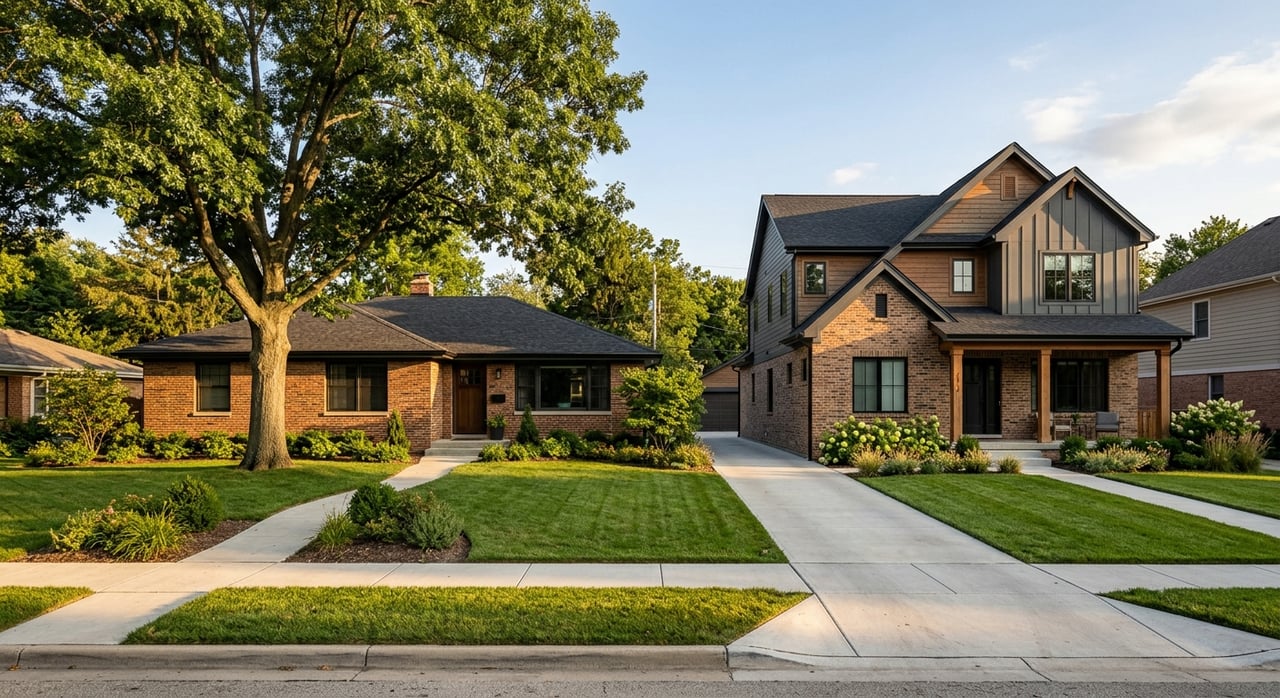
Established neighborhoods in Westfield usually attract buyers who care about a more settled look and feel. Older parts of the city often have a street pattern, landscaping, and neighborhood identity that have had more time to mature.
That difference can be especially noticeable in a city where planning documents note that mature trees and natural areas are limited and take time to establish. If tree cover and an already-settled streetscape matter to you, established neighborhoods may feel more comfortable from day one.
More Character and Renovation Flexibility
An existing home can give you more room to personalize over time. Instead of paying for every builder upgrade up front, you may choose a home with solid basics and improve it at your own pace.
That can be a smart approach if you see potential in dated finishes or want to create value through updates. In Westfield, that is an important consideration because older homes are not automatically in stagnant areas. Many are in places still seeing active reinvestment.
Downtown and Older Areas Are Changing Too
Westfield’s older areas are not frozen in time. Downtown Westfield continues to evolve, with projects like The Union, Park and Poplar, and Ambrose on Main adding apartments, retail, office, hotel, and parking investment.
So if you buy in an established area, you may get a more mature neighborhood feel while still benefiting from ongoing city investment nearby. That mix can be appealing if you want existing character without giving up future upside.
More Due Diligence Matters
The flip side of an established home is that you may need to look more closely at condition. Existing homes can come with deferred maintenance or minor issues that require attention sooner rather than later.
This is where a careful inspection mindset matters. If you are comfortable evaluating repairs, updates, and long-term maintenance, an older home can open the door to strong value creation.
How to Compare the True Cost
In Westfield, the asking price is only part of the story. Because home values are relatively high, it helps to compare the full cost of each option before you decide.
For a new construction home, that may include:
- Base price
- Lot premium
- Builder upgrades
- HOA or community-related costs
- Possible wait time during construction
For an established home, that may include:
- Purchase price
- Immediate repairs
- Cosmetic updates
- Ongoing maintenance
- Future renovation plans
A lower sticker price on an older home does not always mean it is the cheaper path. On the other hand, a new build with upgrades and premiums can stretch your budget faster than expected.
Which Option Fits Your Lifestyle?
Your daily life can help answer this question faster than any feature sheet. If you want a simpler move with fewer immediate projects, new construction may be the better fit.
If you enjoy the idea of improving a home over time, or you care most about mature landscaping and an already-established setting, an older neighborhood may make more sense. Neither choice is automatically better. It depends on how you want to live.
New Construction May Fit You If You Want:
- Fewer near-term repairs
- Builder warranty coverage
- Community amenities
- A home built around current planning and growth
- Less renovation responsibility right away
Established Neighborhoods May Fit You If You Want:
- Mature trees and landscaping
- A more settled streetscape
- Renovation or update potential
- Flexibility to improve over time
- A home in an area with existing character
Think Beyond the House Itself
In Westfield, nearby development timing matters almost as much as the property. The city is planning for continued housing diversification, trail connections, utility expansion, and mixed-use growth.
That means you should look not only at the home, but also at what may be happening around it. Future construction, infrastructure updates, drainage considerations, and nearby commercial development can all shape your experience over time.
This is one reason local guidance matters. A home that looks perfect on paper may feel very different once you understand what is planned around the neighborhood in the next few years.
A Smart Way to Decide
If you are choosing between Westfield new construction and an established neighborhood, start with four practical questions:
- How much repair or renovation work are you comfortable taking on?
- How important is your move-in timeline?
- Do you value mature surroundings more than newer finishes?
- What does the full cost look like after upgrades, repairs, and carrying costs?
When you answer those honestly, the right direction usually becomes clearer. The goal is not to chase what is newest or what feels most charming. The goal is to choose the home that fits your budget, your comfort level, and the way you want to live in Westfield.
If you want help weighing new builds against older homes, planning for inspections, or spotting renovation upside before you buy, Gina Fosso-schibley can help you compare your options with a practical, local perspective.
FAQs
Is new construction in Westfield always the lower-maintenance option?
- Usually, yes. Westfield’s housing analysis links newer homes with less upkeep, and many newly built homes come with builder warranty protection.
Are established neighborhoods in Westfield still changing?
- Yes. Downtown Westfield and other parts of the city continue to see new mixed-use investment, housing growth, and infrastructure planning.
Is an older home in Westfield a good option if you want to renovate?
- It can be. Existing homes may offer more update potential and flexibility, but they also require more careful review of condition and repair needs.
What should buyers compare besides the home price in Westfield?
- Look at lot premiums, builder upgrades, repair scope, maintenance needs, community-related costs, and your expected timeline for moving in.
Is Westfield mostly older homes or newer homes?
- Westfield has a large share of newer housing. More than 65% of its housing was built after 2000, which reflects how quickly the city has grown.
How do you choose between a Westfield new build and an established neighborhood?
- Start with your budget, move-in timing, repair comfort, and preference for either mature surroundings or newer features. Those factors usually point you toward the better fit.